
Basketball shoulder injuries, Inner West
Contact under the ring, landing awkwardly, and a shooting arm that works overhead all season. Assessed against the way you actually play.
Basketball produces two kinds of shoulder problem. There is the contact one, which arrives in a moment: an arm caught in a rebound, a fall on an outstretched hand, a collision driving to the ring. And there is the shooting one, which arrives over weeks and shows up as an ache in the front or the outside of the shoulder that is worse the day after a heavy shooting session.
The second one is easy to ignore because it never stops you from playing, right up until it does. It is usually a capacity problem in the cuff and the muscles that control the shoulder blade, and it responds well to being caught early.
We see players from junior representative level through to NBL squads, and treat the everyday players who make up most of a Tuesday night competition.

The basketball shoulders that come through
The mechanism does most of the diagnostic work here.
The fall on an outstretched hand
Landing off balance from a drive or a rebound. Produces AC joint sprains and, less often, a dislocation. Pain right on the top of the shoulder points at the AC joint; a shoulder that felt like it moved and went back needs a proper assessment.
The rebound arm
The arm up and back, contested, and then pulled. This is the mechanism that produces labral and instability problems, and it is the one most likely to be shrugged off at the time and to matter later.
The shooting shoulder
No single incident. Ache with volume, worse after long shooting sessions, sometimes with a loss of accuracy before there is any real pain. A load and control problem, usually treatable without stopping you from playing.
Physios who work with basketball athletes
You can pick who you see when you book.

Prak Sharma
High Performance Physiotherapist and ASCA Level 1 Coach
Has supported the Sydney Kings NBL squad, and lists basketball athletes among the groups he most enjoys treating. An ASCA accredited Strength and Conditioning Coach as well as a physiotherapist, and a keen basketball player and watcher himself.
AHPRA PHY0002909388

Shash Sharma
Senior Physiotherapist
Works with court sport athletes as well as field sport athletes, and with gym goers and weekend players. Seven years as a physiotherapist across team and clinic environments.
AHPRA PHY0002244698
Where we see these
Our physiotherapists have worked with the Sydney Kings NBL squad and with junior and representative basketball around the Inner West.
Back on court
For a shooting shoulder we rarely take you off the court entirely. We work out how much shooting the shoulder tolerates now, hold it there for a period while the strength work goes in underneath, and then step the volume back up.
For the contact injuries
- Settle it and get range back, while running and lower body work continue
- Rebuild cuff and shoulder blade strength through full range
- Load the overhead and behind-the-body positions specifically, since that is where rebounds happen
- Add contact: contested work, then landing and falling, then full training
The shoulder blade matters more than people expect
A shoulder that hurts overhead is often a shoulder whose blade is not moving well underneath it. That is why we assess how the whole complex moves rather than only testing the cuff, and it is usually the part of the program that makes the difference in a shooting shoulder.
Testing before return
Internal and external rotation strength are tested on a force frame, both sides, at the start and again before you go back. On an overhead athlete we want the injured side to have genuinely caught up, not just stopped hurting.
Overhead loading and taping
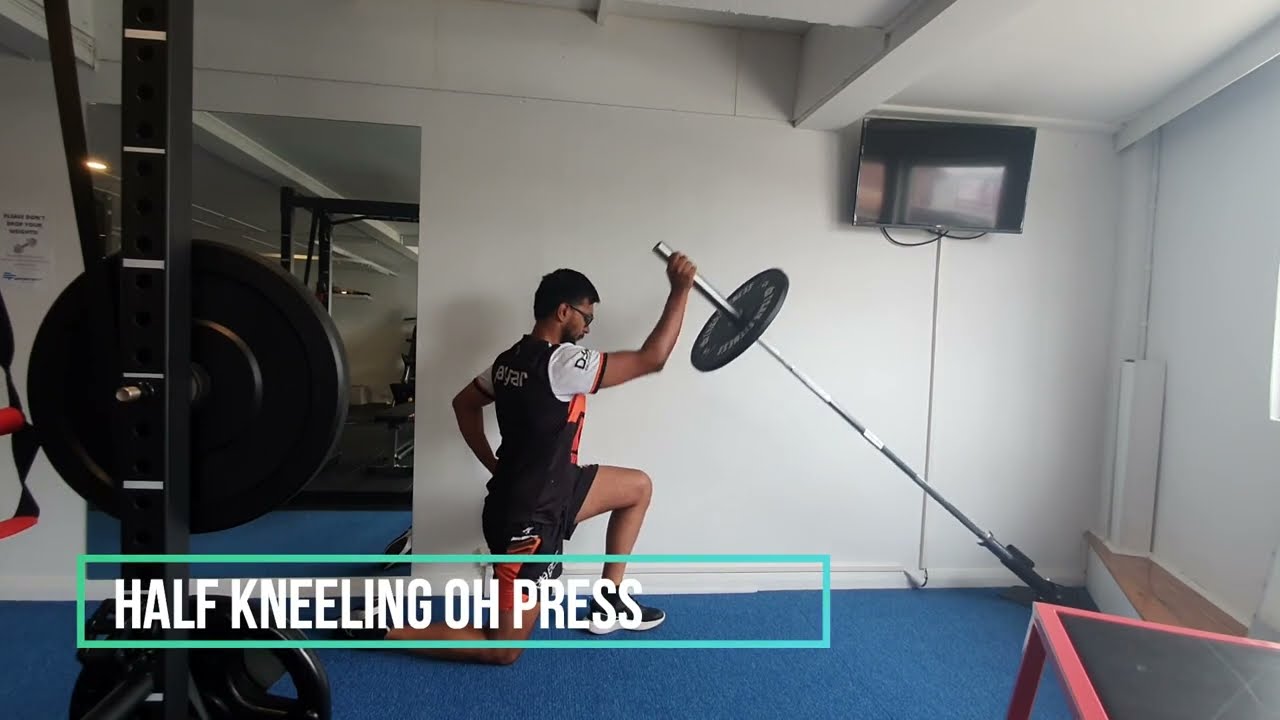
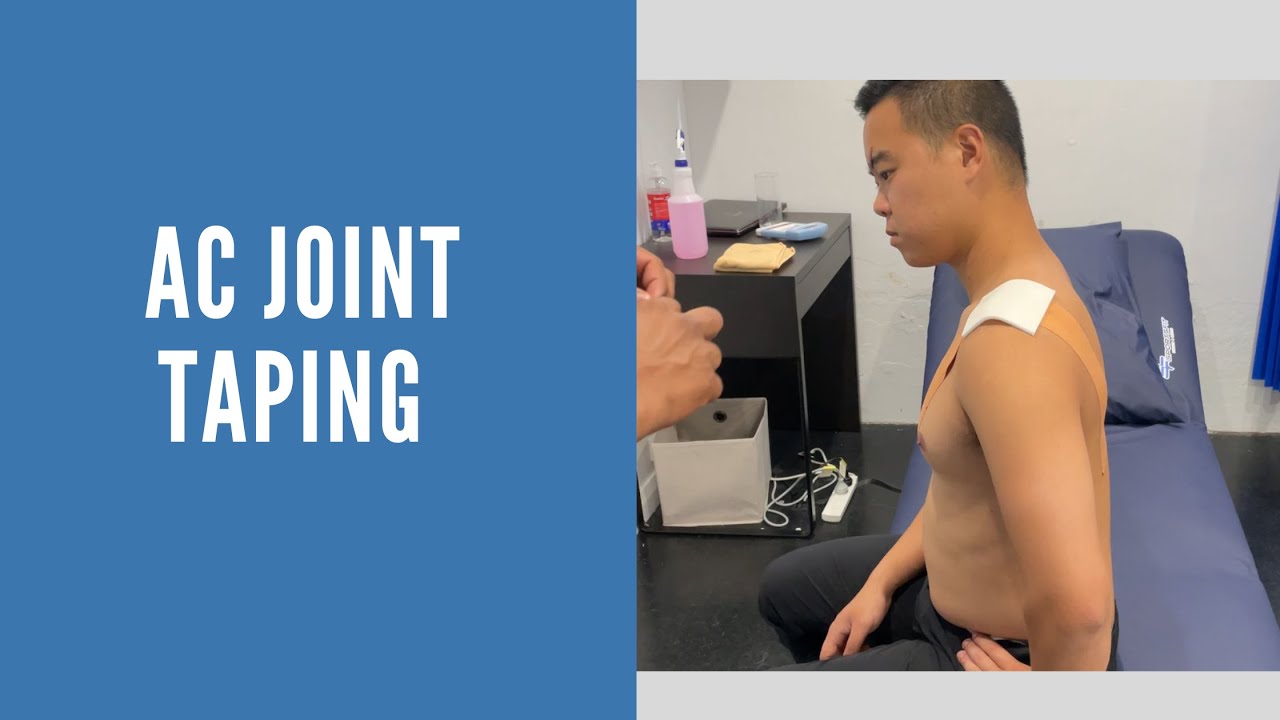
Pressing variations we use to rebuild an overhead shoulder, and the taping for an AC joint after a fall.
Questions we get asked
My shooting arm aches but I can still play. Is it worth getting looked at?
I fell and my shoulder popped back in by itself. Is that serious?
Do you work with junior players?
Shoulder sore on court?
Book a free 30 minute call and we will tell you whether it is a load problem or something that needs a closer look.
No gap on an accepted claim · You choose your own physio · Five Dock