
Volleyball shoulder injuries, Sydney
The attacking shoulder takes more overhead repetitions than almost any sport. Assessed by a physiotherapist who plays the game at national level.
Volleyball asks the shoulder for the same violent overhead action several hundred times a session, and then asks it to absorb the swing at the end of every one. The spike is the load. Serving adds to it, blocking adds a different kind, and the floor adds the traumatic injuries when a dig goes wrong.
That volume is why volleyball shoulders are usually a capacity problem rather than a single incident, and why they tend to arrive in the middle of a season rather than at the start. Pain in the swing, a drop in spike velocity, or an arm that feels heavy in the third set are all worth acting on early.
Seth Chen sees these at our Gladesville clinic. He is a current member of the Australian National Volleyball Team and helps run the volleyball program at Sydney Grammar School, so the conversation about your swing is with someone who takes the same swing.

The volleyball shoulders that come through
Where it hurts in the swing, and how many sessions a week you are playing, do most of the diagnostic work.
The attacking shoulder
Pain at the back of the shoulder as the arm cocks back, or through the swing as the arm decelerates. The cuff is working hardest slowing the arm down, and that is where a spiking shoulder usually gives way. Often with a loss of internal rotation on the hitting side compared with the other arm.
Losing the swing before losing it to pain
The ball stops coming off the hand the way it did, or the arm feels heavy late in a match, and there is no real pain yet. This is the earliest signal and the cheapest point to act on.
Blocking and the net
Arms overhead and loaded suddenly at the net, or a hand jammed on a hard-driven ball. Produces both traumatic problems and a straightforward overload picture, depending on whether there was a moment you can name.
The floor
Digging, rolling and landing on the shoulder. This is where volleyball produces the AC joint sprains and the occasional dislocation, and it is the one group here that needs assessing early rather than being managed as a load problem.
Weakness behind the shoulder blade
Volleyball is one of the few sports with its own well-recognised nerve problem behind the shoulder blade, related to the repeated spiking action. It shows up as weakness turning the arm out, sometimes with visible hollowing at the back of the shoulder and surprisingly little pain. We look for it specifically in high-volume hitters, because it is easy to miss and it is managed differently.
A physiotherapist who plays at national level
Volleyball is seen at our Gladesville clinic rather than Five Dock, because that is where Seth works.

Seth Chen
Senior Physiotherapist
Gladesville
A current member of the Australian National Volleyball Team, the Volleyroos, and a Volleyball and Strength and Conditioning coach at Sydney Grammar School, where he helps develop the volleyball program. He has also worked with the NBA Academy, Brumbies ACT Rugby and Manly United Football Club across injury management, recovery and strength and conditioning.
AHPRA PHY0002830165
Where we see these
SportsFit sponsors Acers Volleyball and Sydney North Volleyball, both through our Gladesville clinic, so a good number of the volleyball shoulders we see each season come from players at those clubs.
Back to hitting at full swing
You can usually keep playing in some form throughout. Setting, defence and passing are often available when hitting is not, and keeping you at training in a reduced role beats sitting a season out.
What gets measured
- Rotation range on both sides, since a large side-to-side difference on the hitting arm is a known risk factor in overhead athletes
- Cuff strength in both directions, on a force frame, so the two arms come back as numbers rather than as a judgement by hand
- How the shoulder blade moves and holds position, which is where a spiking shoulder is usually let down
- Your actual hitting volume: sessions, sets and what changed in the weeks before it started
Then the swing comes back in counted steps
Hitting returns as a written progression rather than an all-or-nothing return: a set number of swings at a set intensity, stepped up when the shoulder tolerates the previous step. Standing hits come back before jump hits, and jump serves usually last, because they ask the most of the arm.
Retesting before you go back
We retest the same numbers before full hitting resumes, so the decision is made against your own measurements from earlier in the block rather than on how the shoulder feels on a good day.
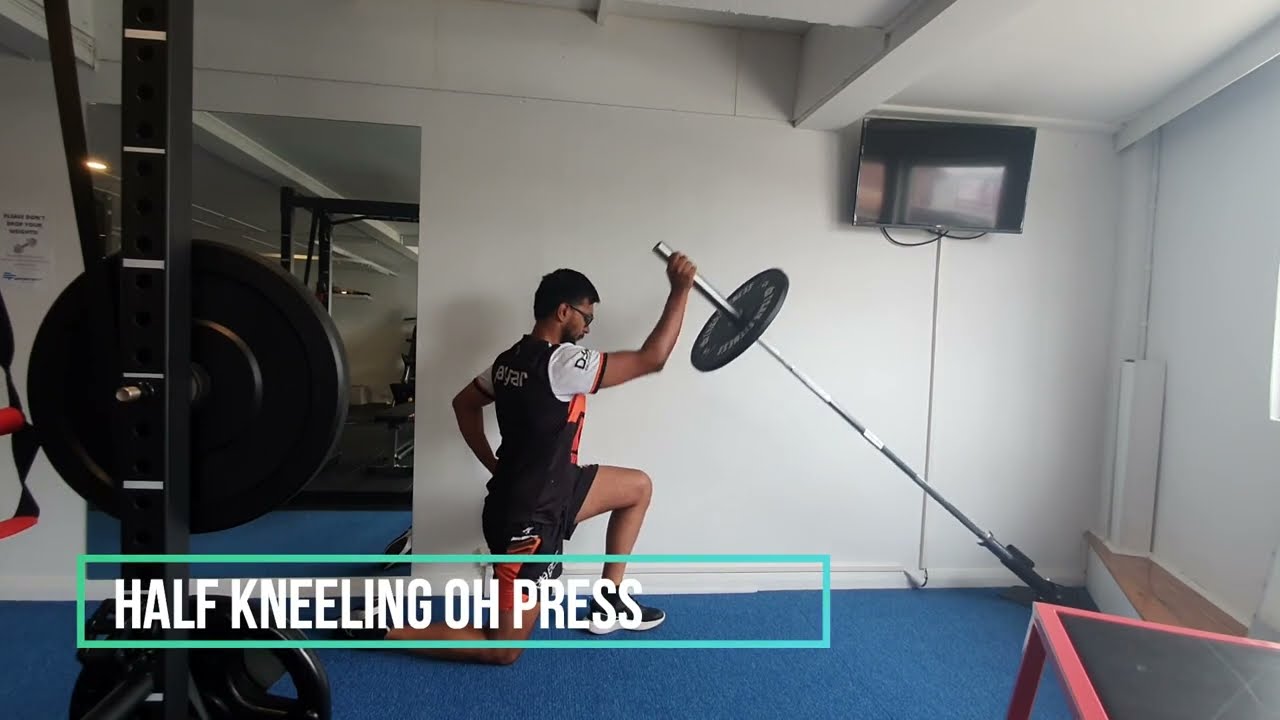
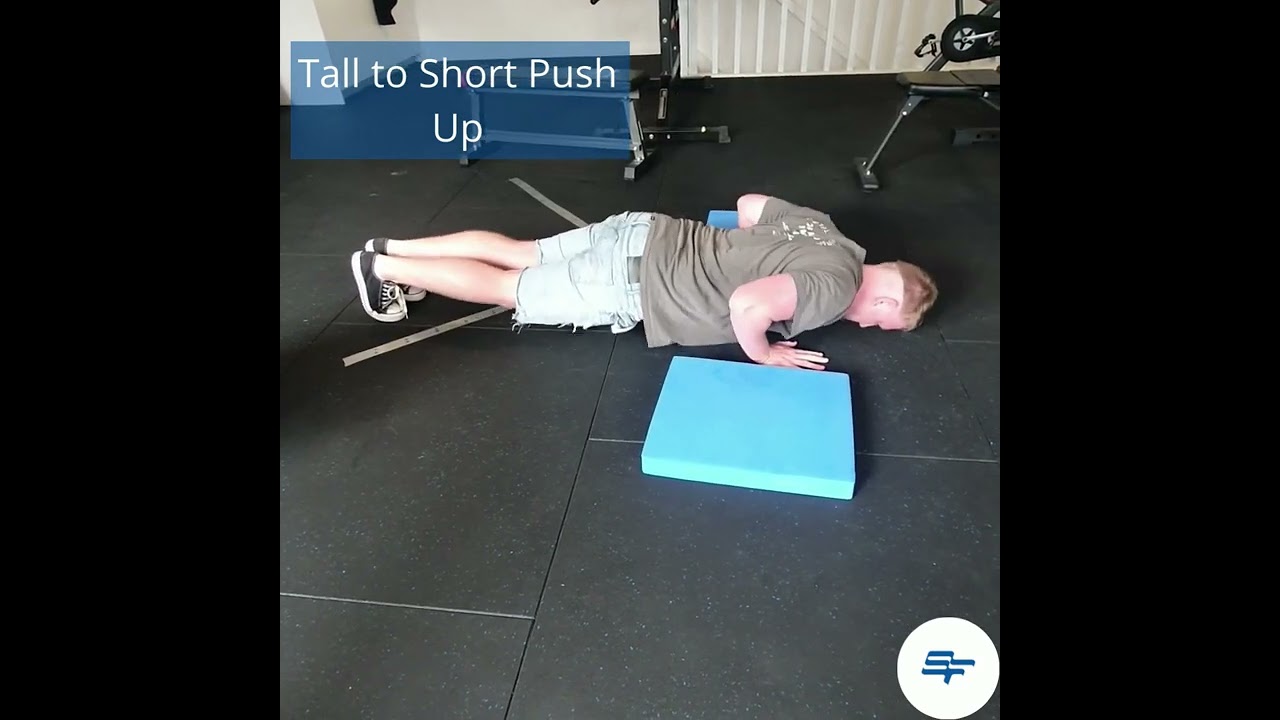
Rebuilding the hitting shoulder
The pressing variations we use to load an overhead shoulder, and the end-stage stability work before a return to full hitting.
Questions we get asked
Can I keep playing while my hitting shoulder settles?
My arm feels heavy and my spike has dropped off, but it does not really hurt. Is that worth an appointment?
Is volleyball seen at Five Dock or Gladesville?
Shoulder sore in the middle of a season?
Book a free call back with Seth and we will work out whether it is a load problem, a range problem, or something that needs a closer look.
Fifteen minutes on the phone with Seth Chen · SportsFit Gladesville · No referral needed