
Football shoulder injuries, Inner West
Outfielders break shoulders by falling on them. Keepers wear them out. The two need quite different rehab, and we treat both.
Football is not a shoulder sport until it is. For an outfield player the shoulder is fine right up to the moment of a fall, a challenge, or an arm caught behind the body going down. That produces sudden, structural injuries: the AC joint, the collarbone, and the dislocation.
A goalkeeper's shoulder is a different animal entirely. Diving is a repeated impact on an outstretched arm, several hundred times a week in a busy preseason, and it produces the slow-building problems: cuff pain, instability that creeps in rather than arrives, and a shoulder that aches the day after a heavy session.
We work with players from NPL and Premier League level down to Sunday football, and three of our physiotherapists have worked inside football clubs.

Outfield and in goal
Tell us which one you are and half the diagnosis is already done.
The fall onto an outstretched arm
The commonest way an outfielder hurts a shoulder. Depending on how you land it produces an AC joint sprain, a collarbone injury, or a dislocation. Worth assessing properly rather than running off, because these three need very different things.
The keeper's shoulder
Ache through the front or the outside of the shoulder that builds over weeks, worse after diving sessions. Usually cuff and shoulder blade capacity that has not kept up with the diving volume, sometimes with a degree of looseness underneath it.
Instability after a dislocation
The shoulder that has come out once and now feels like it might again, particularly with the arm out and turned back. In a non-contact sport there is often more room to rehab this without surgery than there is in rugby, and we will be straight with you about which camp you are in.
The arm caught in a challenge
Going down with an arm trapped or pulled behind you. Less common but worth a careful look, because this mechanism can produce a labral injury that a quick assessment on the sideline will miss.
Physios out of football environments
Three of our team have worked inside football clubs. You can choose who you see when you book.

Roshan Philip
High Performance Physiotherapist
Has worked with APIA Leichhardt Tigers Football Club and NSW Touch Football, across a range of codes and age groups, with an interest in post-operative rehabilitation.
AHPRA PHY0002780163

Shash Sharma
Senior Physiotherapist
Has worked with Hawkesbury FC and Blacktown Spartans FC, and with everyday athletes and weekend players as well as team environments.
AHPRA PHY0002244698

Prak Sharma
High Performance Physiotherapist and ASCA Level 1 Coach
Has worked in NPL football programs, and is an ASCA accredited Strength and Conditioning Coach as well as a physiotherapist.
AHPRA PHY0002909388
The clubs we work with
SportsFit supplies the sports trainers for Independent Football Australia, covering their competitions across the season. Our physiotherapists have also worked inside APIA Leichhardt Tigers, Hawkesbury FC, Blacktown Spartans FC and NPL programs.
What the rehab looks like
For an outfield player the good news is that you can usually keep running and keep training your legs from very early on, so match fitness is rarely the thing that holds up the return. The shoulder work runs alongside it.
Outfield
- Settle the joint and restore range, while running and lower body work continue
- Rebuild strength through full range, including the arm out to the side and turned back
- Add falling and landing, deliberately and progressively, because that is the mechanism
- Retest, then contact and full training before a match
Goalkeepers
Keepers get a load plan, not a rest plan. We count diving repetitions the way we would count bowling overs, cut the volume back to a level the shoulder tolerates, then build it up again with the cuff and shoulder blade strength work underneath it. Technique on the landing side is worth looking at too, since a keeper who lands on a straight arm is asking the shoulder to absorb everything.
Testing
Rotation strength is measured on a force frame at the start and again before return, so both sides can be compared as numbers. For a keeper we also want the numbers to hold up when you are tired, because that is when the shoulder is asked for the most.
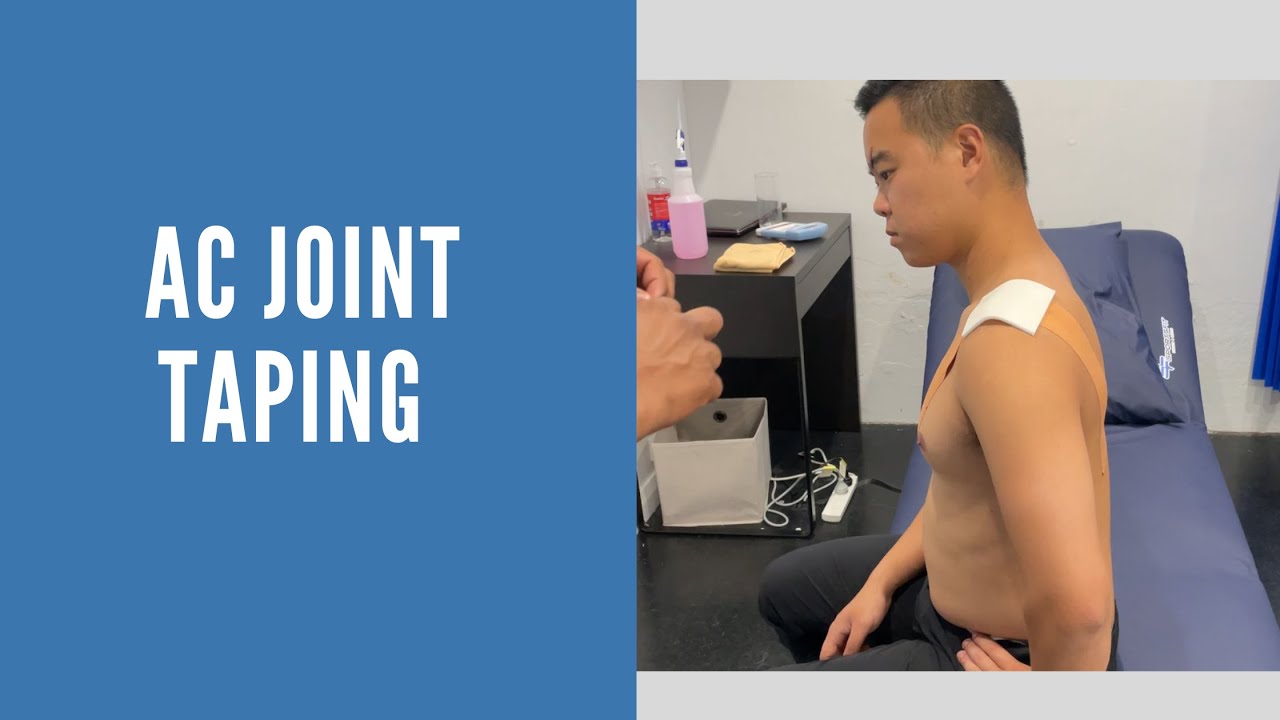
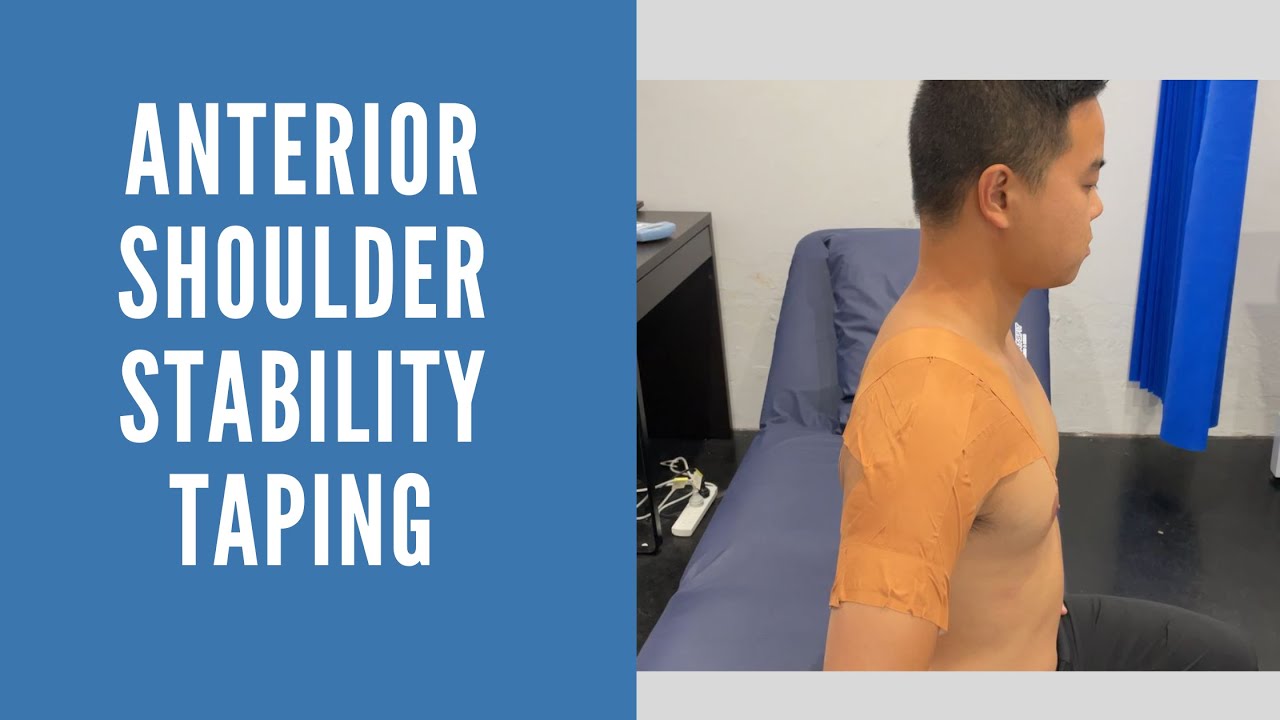
Taping for a shoulder that has been down
AC joint taping for the fall onto an outstretched arm, and the stability taping we use for a shoulder that has come out.
Questions we get asked
I landed on my shoulder and it is sore but I can move it. Do I need to see someone?
Can a keeper keep training while the shoulder settles?
Do I have to stop playing after a dislocation?
Shoulder sore after a fall or a heavy week in goal?
Book a free 30 minute call and we will tell you whether it needs an appointment, a scan, or a change in training load.
No gap on an accepted claim · You choose your own physio · Five Dock